Business Analytics Certification Online opens the door to a world of opportunities in the ever-evolving field of data analysis. This certification not only equips you with essential skills but also validates your expertise to potential employers. As businesses increasingly rely on data-driven decision-making, having a recognized certification can set you apart in a competitive job market.
From understanding key analytics concepts to mastering tools that analyze data effectively, this certification journey is designed to cater to various learning styles and schedules. With the flexibility of online courses, you can study at your own pace, making it easier to balance personal and professional commitments while enhancing your knowledge and career prospects.
Overview of Business Analytics Certification Online
Business analytics certification offers individuals a structured way to develop the necessary skills to interpret data and make informed business decisions. This certification validates a professional’s ability to use analytical tools and methodologies to derive insights from data, enhancing their capacity to contribute to an organization’s success. With the increasing reliance on data-driven decision-making, a certification in business analytics has become a valuable asset for professionals in various fields.The importance of obtaining a certification in business analytics cannot be overstated.
It provides a competitive edge in the job market, as employers often seek candidates who have credible qualifications. Additionally, this certification boosts an individual’s confidence and credibility, equipping them with the knowledge of analytical tools, statistical analysis, and data visualization techniques. Certified professionals can effectively transform raw data into actionable business intelligence, which is crucial for strategic planning and operational efficiency.
Career Paths for Certified Business Analysts
The career paths available to individuals who have obtained a business analytics certification are diverse and rewarding. The growing demand for data-driven strategies has opened numerous opportunities across various industries. Below are some key career options for certified individuals in this field:
- Data Analyst: Data analysts focus on interpreting complex datasets to guide business decisions. Their role often involves using statistical tools to identify trends and patterns.
- Business Intelligence Analyst: These analysts develop strategies to improve operational efficiency and business processes. They often work with reporting tools to present insights to stakeholders.
- Data Scientist: Data scientists apply advanced analytical techniques and machine learning to extract insights from large volumes of data, often developing predictive models to forecast future trends.
- Market Research Analyst: This role involves analyzing market conditions to assess the potential sales of a product or service. Market research analysts help companies understand consumer preferences and industry trends.
- Operations Analyst: Operations analysts evaluate a company’s operational processes and suggest improvements. They use data analysis to enhance productivity and reduce costs.
Each of these roles plays a critical part in ensuring that businesses remain competitive and responsive to market shifts. As organizations continue to leverage data for strategic initiatives, the demand for skilled professionals in business analytics is expected to grow.
Benefits of Online Certification
The rise of online learning has transformed the landscape of professional development, making it more accessible than ever before. Pursuing a certification online offers numerous advantages compared to traditional classroom methods, catering to the needs of today’s busy professionals while ensuring quality education. As industries evolve and demand for specialized skills increases, online certification programs provide an effective pathway for learners to enhance their expertise and advance their careers.
One of the most significant benefits of online certification is the flexibility it offers. Learners can study at their own pace, choosing when and where to engage with course materials. This autonomy is particularly beneficial for working professionals who may have other commitments, such as jobs or family responsibilities. Additionally, online courses often allow for a more personalized learning experience, enabling students to focus on areas where they need improvement without the distractions of a traditional classroom setting.
Flexibility and Accessibility of Online Learning
The flexibility and accessibility of online learning create opportunities for a diverse range of learners. The ability to access courses from anywhere with an internet connection means that individuals can pursue their certification regardless of their geographic location. Here are some key points illustrating the impact of these features on learners:
- Time Management: Online certification programs allow learners to create their own schedules, making it easier to balance studies with work and personal life.
- Diverse Learning Resources: Many online programs provide a range of resources such as video lectures, interactive quizzes, and discussion forums that enhance the learning experience.
- Self-Paced Learning: Learners can take the time they need to understand concepts fully, reducing the pressure often felt in traditional classroom settings.
- Broader Access to Specialized Content: Online platforms often feature a wider variety of courses than local institutions, allowing learners to choose programs that align precisely with their career goals.
Additionally, data supports the effectiveness of online learning for professional development. According to a report by the U.S. Department of Education, students in online learning conditions performed better, on average, than those receiving face-to-face instruction. Furthermore, a survey by the Online Learning Consortium found that 70% of academic leaders believe that online learning is as good or better than traditional education.
Such statistics highlight the growing acceptance and recognition of online certification as a valid and effective means of furthering one’s education and career.
In summary, the benefits of online certification, characterized by flexibility and accessibility, empower learners to achieve their professional goals while accommodating their unique schedules and commitments. As industries demand skilled professionals, online certification serves as a vital resource for career advancement.
Course Structure and Curriculum
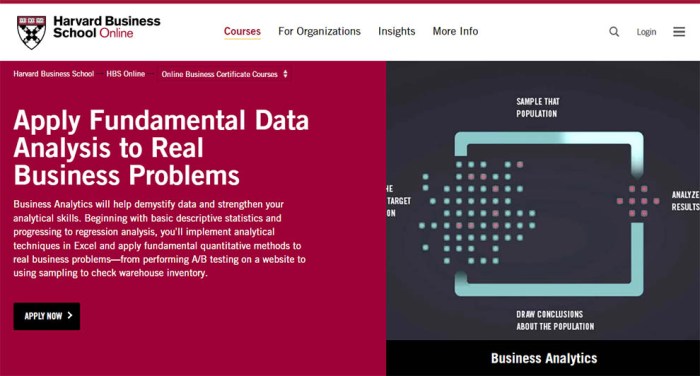
The Course Structure and Curriculum of a Business Analytics Certification Online program is designed to equip students with essential knowledge and practical skills. Each program offers a blend of theoretical understanding and hands-on experience, preparing learners for real-world analytics challenges. Participants will explore various subjects that contribute to a comprehensive understanding of business analytics.The curriculum typically encompasses a range of subjects aimed at developing analytical acumen as well as technical proficiency.
The following key modules are commonly included in business analytics certification programs:
Common Subjects and Modules
The subjects covered in these programs provide a well-rounded foundation in business analytics. Participants can expect to delve into areas such as:
- Introduction to Business Analytics
- Statistical Analysis and Data Mining
- Predictive Modeling Techniques
- Data Visualization and Reporting
- Big Data Technologies
- Machine Learning for Business
- Operational Analytics
- Ethics in Data Science
These modules are crucial for developing an understanding of how to translate data into actionable business insights.
Key Skills Acquired
Through the program, learners will acquire several key skills that are vital for success in the field of business analytics. These skills include:
- Data Interpretation and Analysis
- Statistical and Analytical Thinking
- Proficiency in Analytical Tools (e.g., R, Python, SQL)
- Data Visualization Skills (using tools like Tableau or Power BI)
- Understanding of Machine Learning Concepts
- Effective Communication of Analytical Findings
These competencies will empower students to make informed decisions and contribute to data-driven business strategies.
Comparison of Online Certification Programs
When considering different online certification programs, it’s helpful to compare their curriculum and duration. Below is a table summarizing various programs:
| Program Name | Duration | Core Modules |
|---|---|---|
| Data Analytics Bootcamp | 12 weeks | Intro to Analytics, SQL, Data Visualization |
| Business Analytics Professional Certificate | 6 months | Statistical Analysis, Predictive Modeling, Big Data |
| Advanced Business Analytics Program | 8 months | Machine Learning, Data Mining, Data Ethics |
This comparative overview assists prospective learners in selecting the program that best suits their career goals and schedule.
Eligibility and Prerequisites
Enrolling in a business analytics certification course requires meeting certain eligibility criteria and prerequisites that are designed to ensure participants are well-prepared for the challenges of the program. Generally, these requirements help to create a productive learning environment where all students can excel.Before starting a business analytics certification program, candidates should ideally possess a foundational understanding of key concepts in data analysis, statistics, and business operations.
While specific requirements may vary by institution, some common prerequisites include a background in mathematics or related fields, familiarity with analytical tools, and a basic understanding of programming languages such as Python or R.
Typical Requirements for Enrollment
It’s essential to consider the typical requirements that prospective students must meet to be eligible for enrollment in a business analytics certification course. These requirements often include:
- A bachelor’s degree in a relevant field such as business, finance, statistics, or computer science.
- Basic knowledge of statistics and data analysis principles, often supported by coursework or previous experience.
- Proficiency in Microsoft Excel, as it is a fundamental tool used throughout the course.
Essential Skills and Background Knowledge, Business Analytics Certification Online
Having certain skills and background knowledge significantly enhances a candidate’s ability to succeed in a business analytics certification program. Key skills include:
- Critical thinking and problem-solving abilities to analyze complex data sets and derive actionable insights.
- Familiarity with data visualization tools such as Tableau or Power BI, which aid in presenting data effectively.
- Basic programming skills, particularly in languages like SQL, Python, or R, to manipulate and analyze data efficiently.
Prior Certifications That Enhance Candidacy
While not mandatory, having prior certifications can strengthen a candidate’s application for online business analytics certifications. Recognized certifications that may enhance candidacy include:
- Google Data Analytics Professional Certificate, demonstrating foundational knowledge in data analysis.
- Microsoft Certified: Data Analyst Associate, showcasing expertise in tools like Power BI.
- IBM Data Science Professional Certificate, which provides a broad understanding of data science principles and methodologies.
“Prior certifications not only improve your understanding of analytics but also reflect your commitment to the field.”
Top Online Certification Providers
As the demand for data-driven decision-making continues to rise, numerous institutions have developed online business analytics certification programs. These programs cater to a range of professionals, from beginners seeking foundational knowledge to seasoned analysts looking to sharpen their skills. Below is a compilation of leading certification providers, highlighting their unique features and offerings.Each provider brings a distinct approach to business analytics education, ensuring that students receive comprehensive training tailored to industry needs.
The following sections Artikel some of the top institutions offering these certifications, along with a comparative overview to help prospective students make informed decisions.
Leading Institutions for Business Analytics Certification
The following list features key players in the online business analytics certification space, detailing their unique features:
- Coursera: Offers courses from top universities like Johns Hopkins and the University of Michigan. Unique features include flexible learning schedules and financial aid options.
- edX: Features programs from institutions such as MIT and Harvard. Notable for its MicroMasters programs that provide a pathway to a full master’s degree.
- Simplilearn: Focuses on practical, hands-on training with project work included. Known for its extensive range of partnerships with industry leaders like IBM.
- Udacity: Emphasizes real-world projects and mentorship in its nano-degree programs, especially popular among tech professionals seeking to transition into analytics roles.
- LinkedIn Learning: Provides bite-sized courses with a strong emphasis on skills development. Users can also showcase their completed courses on their LinkedIn profiles.
Comparison of Certification Providers
To help you choose the right certification program, here is a comparison table that summarizes key aspects such as costs, duration, and accreditation status for the top providers:
| Provider | Cost | Duration | Accreditation |
|---|---|---|---|
| Coursera | $39/month (subscription-based) | Flexible, typically 3-6 months | University accredited |
| edX | $150 – $300 per course | 6-12 weeks | University accredited |
| Simplilearn | $999 – $1,499 | 3-6 months | Industry recognized |
| Udacity | $399/month (subscription-based) | 3-6 months | Not formally accredited |
| LinkedIn Learning | $29.99/month (subscription-based) | Varies, typically short courses | Not formally accredited |
The right certification can significantly enhance your career prospects in the field of business analytics.
Learning Materials and Resources: Business Analytics Certification Online
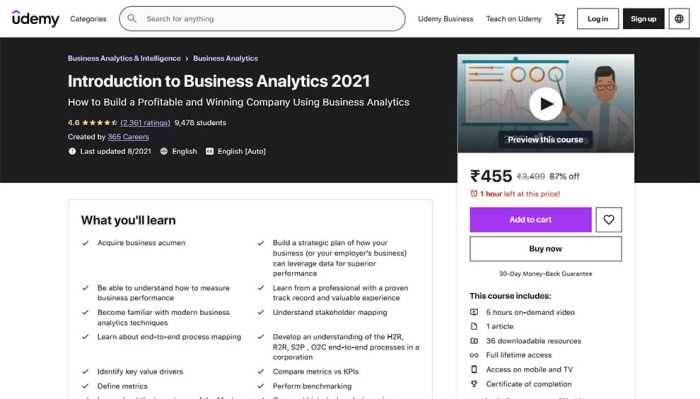
Online business analytics certification programs offer a wealth of learning materials and resources designed to enhance students’ understanding of the subject. These resources play a crucial role in developing the analytical skills needed to excel in the business world. From textbooks to software tools, the variety of materials available can cater to different learning styles, ensuring that every student can find something that resonates with them.Several types of resources are essential for online business analytics students to facilitate their learning experience.
These resources cover foundational concepts, practical applications, and advanced analytics techniques. Below are some key categories of resources that students may find beneficial:
Recommended Textbooks
Textbooks provide a structured approach to learning business analytics concepts. Some highly recommended titles include:
- “Business Analytics: Data Analysis & Decision Making” by S. Christian Albright and Wayne L. Winston
-This comprehensive guide covers a wide range of analytics techniques with practical applications in business. - “Data Science for Business” by Foster Provost and Tom Fawcett
-This book explores the principles of data science and its application in solving business problems. - “Naked Statistics: Stripping the Dread from Data” by Charles Wheelan
-A user-friendly introduction to statistics that helps demystify data analysis.
Software and Online Tools
Familiarity with relevant software is critical for aspiring business analysts. Recommended tools include:
- Microsoft Excel
-A powerful spreadsheet tool widely used for data analysis and visualization. - Tableau
-A leading data visualization tool that helps users create interactive and shareable dashboards. - R and Python
-Popular programming languages for data analysis, with numerous libraries specifically designed for analytics tasks.
Community Forums and Study Groups
The role of community forums and study groups cannot be overstated in the online learning environment. Engaging with peers and industry professionals can greatly enhance the educational experience. Here’s how:
- Networking Opportunities
-Joining forums allows students to connect with others who share similar interests, facilitating knowledge sharing and networking. - Peer Support
-Study groups can provide motivation and support, ensuring students stay on track with their studies. - Resource Sharing
-Members often share valuable resources, including articles, tools, and study materials, enriching the learning experience for all participants.
Tips for Success in Online Certification
Navigating the world of online certification can be challenging but incredibly rewarding. With the right strategies and mindset, you can maximize your learning experience and achieve your certification goals. Here are some practical tips to set you up for success.
Time Management Strategies
Effective time management is essential for balancing your studies with other responsibilities. Here are several strategies to help you allocate your time wisely:
- Create a Schedule: Design a weekly study schedule that includes dedicated blocks of time for coursework, assignments, and breaks.
- Set Specific Goals: Break your study sessions into specific, achievable goals to maintain focus and provide a sense of accomplishment.
- Use a Timer: Implement techniques such as the Pomodoro Technique, where you study intensely for 25 minutes and then take a 5-minute break to refresh your mind.
- Prioritize Tasks: Identify and tackle high-impact tasks first to ensure that you are making the most of your study time.
Staying Motivated and Engaged
Maintaining motivation throughout an online course can be challenging. Here are some effective methods to keep your spirits high:
- Join Study Groups: Collaborate with peers in study groups to share insights, ask questions, and stay accountable.
- Reward Yourself: Set up a reward system for completing milestones to keep yourself motivated and celebrate your progress.
- Engage with Instructors: Take advantage of office hours or discussion forums to interact with instructors, deepening your understanding and keeping your interest alive.
- Stay Connected: Use online forums or social media to connect with fellow students, fostering a sense of community and support.
Creating a Personalized Study Plan
A tailored study plan that aligns with your personal learning style can enhance your learning experience. Follow these steps to create an effective plan:
- Assess Your Learning Style: Identify whether you are a visual, auditory, or kinesthetic learner to customize your study approach accordingly.
- Incorporate Varied Materials: Use diverse resources such as videos, podcasts, and articles to cater to your learning preferences and keep things interesting.
- Allocate Time for Review: Schedule regular review sessions to reinforce knowledge and improve retention, ensuring that you are not just cramming before exams.
- Be Flexible: Allow for adjustments in your study plan as you progress, adapting to what works best for you as your understanding evolves.
Industry Recognition and Value
Online certifications in business analytics have gained significant traction among employers, reflecting a growing recognition of their value in the professional landscape. As businesses increasingly lean on data-driven decision-making, the demand for skilled analysts with formal recognition of their expertise is rising. Online certifications serve as a testament to a candidate’s commitment to developing their skills and adapting to industry trends.The perception of online certifications has evolved positively, with many employers now equating them with traditional degrees, especially when provided by reputable institutions.
Companies appreciate the flexibility and accessibility these programs offer, which allows professionals to enhance their qualifications without interrupting their careers. This recognition can lead to enhanced job prospects, promotions, and potentially higher salaries for those certified.
Employer Perception of Online Certifications
Employers in the business analytics field view online certifications as a credible validation of a candidate’s capabilities. The effectiveness of these certifications often hinges on the issuing institution’s reputation. Generally, certifications from well-known organizations are more highly regarded. Key aspects influencing employer perception include:
- Reputable Providers: Certifications offered by recognized institutions often carry more weight, as they signify rigorous training and knowledge.
- Skill Relevance: Certifications that align closely with industry needs demonstrate that candidates are equipped with the latest tools and methodologies.
- Continuous Learning: Candidates who pursue online certifications show a proactive approach to learning, which is highly valued in rapidly changing fields like analytics.
Return on Investment for Certification
Investing in an online certification can yield substantial returns, both in terms of financial gain and career advancement. The costs associated with obtaining a certification can often be offset by the benefits it brings. Statistics indicate that professionals with certifications tend to earn higher salaries compared to their non-certified peers.A report from the International Association for Six Sigma Certification states that certified professionals can earn up to 20% more than those without certification.
Additionally, obtaining a certification can make candidates more competitive in the job market, potentially leading to better job opportunities and career progression.
Testimonials from Certified Professionals
Real-world experiences from professionals who have attained their certifications highlight the tangible benefits that come with this qualification. For instance, Jane Doe, a data analyst at a Fortune 500 company, shared her journey stating:
“My online certification was a game changer. It not only deepened my knowledge but also made me stand out in a pool of applicants. Shortly after I earned my certification, I was promoted to a managerial role.”
Furthermore, John Smith, who transitioned from a non-technical role into a business analytics position, emphasized the impact of his certification:
“The skills I gained through the certification program gave me the confidence to tackle complex data problems. It opened doors to opportunities I never thought possible.”
These testimonials underscore the practical value of obtaining an online certification in business analytics, emphasizing both professional growth and personal satisfaction as key outcomes.
Future Trends in Business Analytics Certification
As the field of business analytics continues to evolve at a rapid pace, certification programs are adapting to meet emerging trends and technologies. The future of business analytics certification is characterized by a focus on advanced data analytics, machine learning, and the integration of new technologies, which are reshaping how professionals are trained and certified in this domain. This section explores these trends and their implications for certification programs, along with the role of technology in enhancing online learning experiences and addressing the rising demand for analytics professionals.
Emerging Trends in Business Analytics
The landscape of business analytics is continuously shifting, driven by advancements in technology and the increasing complexity of data. Some of the key trends impacting certification programs include:
- Artificial Intelligence and Machine Learning: The incorporation of AI and machine learning techniques into analytics practices has become essential. Certifications now emphasize these skills, preparing professionals to leverage automated insights and predictive analytics in decision-making.
- Data Visualization and Storytelling: The ability to present data compellingly is increasingly valued. Certification programs are adopting modules that focus on data visualization tools and storytelling techniques to help analytics professionals articulate their findings effectively.
- Cloud-Based Analytics: With the rise of cloud computing, certifications are expanding to include training on cloud analytics platforms, which allow organizations to scale their analytics capabilities efficiently.
- Focus on Ethics and Data Governance: As data privacy regulations become stricter, there’s a heightened emphasis on ethics and governance in data analytics. Certification programs are integrating these critical areas to prepare professionals for compliance and ethical considerations.
Technology Advancements in Online Learning
Advancements in technology are transforming online learning experiences, making them more interactive and accessible. Key developments include:
- Virtual and Augmented Reality: These technologies are being utilized to create immersive learning environments, allowing certification candidates to engage with data in new and innovative ways.
- Adaptive Learning Systems: Using AI, adaptive learning platforms can personalize the learning experience by adjusting content based on the learner’s pace and understanding, enhancing retention and effectiveness.
- Mobile Learning: The rise of mobile technology permits learners to access certification materials anytime, anywhere, making it easier to fit learning into busy schedules.
- Gamification: By incorporating game-like elements into courses, certification programs increase engagement and motivation among learners, making the learning process more enjoyable.
Increasing Demand for Analytics Professionals
The demand for skilled analytics professionals is surging across industries, as organizations increasingly rely on data-driven strategies. Certification plays a crucial role in meeting this demand by:
- Validating Skills: Certifications provide a standardized way to demonstrate proficiency in analytics, making candidates more attractive to employers looking for qualified talent.
- Bridging Skill Gaps: As the analytics field evolves, certifications help professionals upskill and stay competitive by providing the latest knowledge and best practices.
- Enhancing Career Opportunities: Certified professionals often have access to better job prospects and higher salary potential, as certifications are recognized indicators of expertise by employers.
- Networking Opportunities: Many certification programs offer networking platforms, which can connect professionals with industry leaders and peers, further enhancing career growth.
Closure
In summary, pursuing a Business Analytics Certification Online is not just an investment in your education but a strategic move towards a rewarding career path. As the demand for analytics professionals continues to grow, being certified adds significant value to your profile. Whether you are starting your career or looking to advance, this certification can provide you with the tools and recognition needed to succeed in a data-driven world.
Answers to Common Questions
What is the duration of a typical online certification program?
The duration varies by provider but usually ranges from a few weeks to several months, depending on the structure of the program.
Are there any prerequisites for enrolling in a business analytics certification course?
While not always required, having a background in statistics or business can be beneficial for understanding the course material.
Will I receive a physical certificate upon completion?
Most online programs offer a digital certificate, and some may provide a physical copy upon request, often for an additional fee.
Is financial aid available for online certification programs?
Many institutions offer financial aid or payment plans to help make certification more accessible to learners.
How is online certification perceived by employers?
Employers generally view online certifications positively, especially from reputable institutions, as they demonstrate commitment to professional development.