Study In USA For International Students Requirements is a gateway for aspiring learners keen on expanding their horizons in one of the world’s most prestigious educational landscapes. With its diverse institutions, innovative programs, and rich cultural experiences, the USA stands out as a prime destination for students from around the globe. As international student enrollment continues to rise, understanding the essential requirements for studying in the USA becomes crucial for a smooth transition to this vibrant academic environment.
From admission prerequisites to visa processes, each step plays a vital role in shaping your study abroad journey. This guide aims to illuminate the necessary requirements, ensuring that you are well-prepared to embrace the opportunities that await you.
Introduction to Studying in the USA
The United States has long been a premier destination for international students seeking a world-class education. With its diverse academic offerings and innovative teaching methods, the USA attracts millions of students eager to enhance their knowledge and skills. The significance of studying in the USA lies not only in the quality of education but also in the unique cultural experiences that come with living in a vibrant and dynamic environment.The educational landscape in the USA is characterized by a wide array of institutions, including community colleges, universities, and specialized schools that cater to various fields of study.
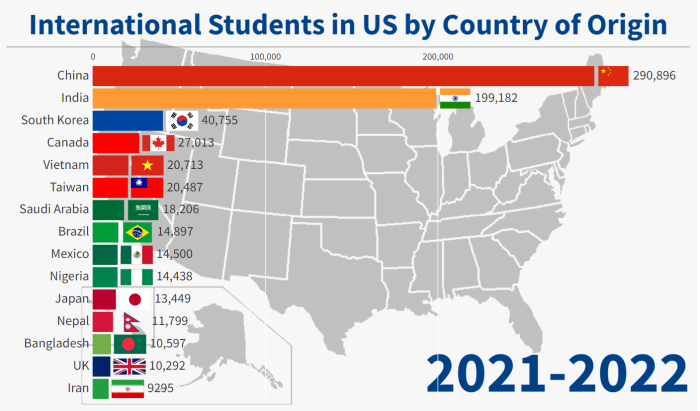
According to the Institute of International Education, the USA hosted over 1 million international students in the 2021-2022 academic year, making it a leading destination for global learners. This influx of international students enriches the academic community, fostering cross-cultural exchange and collaboration.
Educational Institutions and Programs
The USA boasts a vast selection of educational institutions, each offering unique programs and opportunities for students. The higher education system includes:
- Research Universities: Renowned for their rigorous academic programs and extensive research facilities, institutions like Harvard, Stanford, and MIT are at the forefront of education and innovation.
- Liberal Arts Colleges: These institutions focus on a broad-based education, encouraging critical thinking and communication skills, exemplified by schools such as Williams College and Swarthmore College.
- Community Colleges: Offering two-year programs that lead to associate degrees or certificates, community colleges provide affordable education options and pathways to four-year universities.
- Online and Distance Learning: Many universities now offer online courses and degree programs, making education accessible to students worldwide. Institutions such as the University of Phoenix and Southern New Hampshire University lead in this area.
The diversity in educational opportunities allows students to select programs that best align with their career goals and interests.
“The USA hosts more international students than any other country, reflecting its appeal and the high quality of its education system.”
With a strong emphasis on research and innovation, American universities are known for their cutting-edge programs in STEM fields, humanities, and social sciences. This is evidenced by the wide range of scholarships and grants offered to international students, aimed at attracting top talent from around the globe. In summary, studying in the USA is a profound experience that combines high-quality education with cultural enrichment.
The educational landscape is diverse, offering numerous pathways for students to achieve their academic and professional aspirations.
Admission Requirements for International Students
To pursue studies in the United States as an international student, understanding the admission requirements is crucial. These requirements ensure that applicants have the necessary qualifications and preparedness for academic rigor in US universities. Organizations and institutions often set these criteria to maintain educational standards and support students in their academic journey.
International students generally must prepare a variety of documents and fulfill specific criteria depending on whether they are applying for undergraduate or graduate programs. Below is a detailed overview of the common requirements for admission to US universities.
Required Documents for Applications
The following table Artikels the essential documents needed for both undergraduate and graduate applications. It’s crucial for students to gather these documents meticulously, as any missing items could delay the admission process.
| Document | Undergraduate Applications | Graduate Applications |
|---|---|---|
| Application Form | Common Application or individual university form | University-specific graduate application form |
| Transcripts | High school transcripts | Bachelor’s degree transcripts |
| Standardized Test Scores | SAT or ACT scores | GRE or GMAT scores (if required) |
| Letters of Recommendation | Two letters from teachers or counselors | Two to three letters from professional or academic references |
| Personal Statement | Essays on motivation and goals | Statement of purpose and research interest |
| Proof of English Proficiency | TOEFL or IELTS scores | TOEFL or IELTS scores |
| Financial Documentation | Proof of funds for tuition and living expenses | Proof of funds for tuition and living expenses |
In the competitive landscape of US education, standardized tests play a pivotal role in the admission process. These tests, such as the SAT or ACT for undergraduates and the GRE or GMAT for graduates, serve as metrics to evaluate students’ readiness for college-level work. They assess critical thinking, problem-solving skills, and knowledge in specific subject areas.
Standardized testing can significantly influence admission decisions, scholarship opportunities, and even placement in advanced programs.
Additionally, some universities may consider other factors such as extra-curricular involvement, personal achievements, and unique experiences that contribute to a well-rounded application. Thus, while standardized tests are important, they are just one aspect of a larger profile that universities review when making admission decisions.
Language Proficiency Requirements
Language proficiency is a key component for international students aiming to study in the USA. Proficiency in English ensures that students can comprehend lectures, participate in discussions, and complete assignments effectively. Academic institutions typically require proof of English proficiency through standardized tests, which serve as a benchmark for evaluating non-native speakers.Many universities and colleges in the United States accept specific English language proficiency tests.
The two most commonly accepted tests are the Test of English as a Foreign Language (TOEFL) and the International English Language Testing System (IELTS). Each institution sets its own passing scores, depending on the type of program—undergraduate, graduate, or professional. Understanding these requirements is crucial for prospective students.
Accepted English Language Proficiency Tests
International students must provide evidence of their English proficiency through standardized testing. The following tests are widely recognized by American institutions:
- TOEFL (Test of English as a Foreign Language): This test measures the ability to use and understand English at the university level. Most schools require a minimum score ranging from 61 to 100, depending on the program.
- IELTS (International English Language Testing System): This test evaluates listening, reading, writing, and speaking skills. A typical minimum score for admission is between 5.5 to 7.5, which also varies by program.
Minimum Score Requirements for Different Programs
Specific programs may have different score thresholds for admission. Understanding these minimums can help students prepare effectively. Typically, the score requirements are as follows:
| Program Level | TOEFL Minimum Score | IELTS Minimum Score |
|---|---|---|
| Undergraduate | 61 – 80 | 5.5 – 6.5 |
| Graduate | 80 – 100 | 6.5 – 7.5 |
| Professional Programs | 90 – 100 | 7.0 – 8.0 |
Preparation Tips for Language Proficiency Tests
Preparing for language proficiency tests requires a disciplined approach and strategic studying. Here are some effective tips to enhance performance:
- Familiarize with the Test Format: Understanding the structure of the test is crucial. Familiarize yourself with the types of questions and sections included in the TOEFL or IELTS.
- Practice Regularly: Consistent practice enables better retention of language skills. Use practice tests and online resources to simulate the testing environment.
- Engage with English Media: Immerse yourself in English through movies, podcasts, and books. This will help enhance listening and comprehension skills.
- Join Study Groups: Collaborating with peers can provide motivation and different perspectives on problem-solving. Study groups can also enhance speaking skills through conversation practice.
- Consider Professional Tutoring: If possible, seek assistance from language instructors who can provide personalized strategies and feedback.
Financial Requirements and Proof of Funds
Studying in the USA comes with various financial obligations that international students must meet to secure their admission and visa. Understanding these financial requirements is crucial for prospective students, as it not only impacts their ability to study but also ensures they can sustain themselves during their time in the country. Universities and immigration authorities require clear evidence of financial capability to support education and living expenses while in the USA.International students need to provide specific financial documentation to demonstrate their ability to cover tuition fees, living expenses, and other associated costs.
This documentation helps universities assess if students can manage their finances throughout their studies, while also satisfying visa requirements that mandate proof of funds for the duration of their stay.
Estimated Costs for Tuition, Living Expenses, and Insurance, Study In USA For International Students Requirements
It’s essential to have a clear understanding of the financial burden associated with studying in the USA. The following estimated costs Artikel the typical expenses international students may incur:
- Tuition Fees: Ranges from $15,000 to $50,000 per year, depending on the institution and program.
- Living Expenses: Typically between $10,000 and $20,000 annually. This includes accommodation, food, transportation, and personal expenses.
- Health Insurance: Estimated at about $1,000 to $2,500 per year, depending on the coverage plan selected.
- Miscellaneous Expenses: Additional costs such as books, supplies, and personal expenses may range from $500 to $1,500 per year.
Providing proof of funds is a critical step for international students when applying for a student visa. To demonstrate financial capability to universities and visa authorities, students can use the following methods:
Students often show their financial stability through bank statements, affidavits of support, scholarship letters, or sponsorship letters.
Students should gather and present documents such as bank statements reflecting sufficient funds, letters from sponsors detailing their financial support, or proof of scholarships awarded. It’s important for the funds to be readily accessible and in the students’ names or that of their sponsors. This financial evidence assures both educational institutions and immigration officials that students can meet their financial obligations throughout their studies in the USA.
Student Visa Application Process
To study in the United States, international students must navigate the F-1 student visa application process. This visa allows students to attend academic programs while living in the U.S. Understanding the steps involved in applying for this visa is crucial to ensure a smooth transition into your studies abroad.The F-1 visa application process involves several key steps and documentation requirements.
Below is a detailed overview of the necessary stages and documentation involved in obtaining your student visa.
Steps to Apply for an F-1 Student Visa
The application process for an F-1 visa can be broken down into several essential steps:
1. Receive Acceptance from a SEVP-Approved School
Before applying for the visa, students must be accepted into a Student and Exchange Visitor Program (SEVP)-approved institution.
2. Pay the SEVIS Fee
After obtaining your Form I-20 from the institution, pay the SEVIS fee, which helps fund the system that tracks international students.
3. Complete the DS-160 Form
This online form is the Nonimmigrant Visa Application. It requires personal information, passport details, and your purpose of travel.
4. Schedule Your Visa Interview
Contact the nearest U.S. Embassy or Consulate to book an appointment for your visa interview.
5. Prepare for the Interview
Gather all required documents and prepare for your visa interview, where you will answer questions regarding your study plans and ties to your home country.
6. Attend the Visa Interview
Present all necessary documents and answer questions at your scheduled interview.
7. Receive Your Visa
Once approved, your F-1 visa will be stamped in your passport, allowing you to enter the U.S. and commence your studies.
Timeline and Required Documents for Visa Application
The timeline for the F-1 visa application can vary, but it is essential to keep track of the necessary documents. Below is a table outlining the timeline alongside the required documents:
| Step | Document Required | Timeline |
|---|---|---|
| Receive Acceptance | Form I-20 from SEVP-approved school | 3-6 months before classes start |
| Pay SEVIS Fee | Payment receipt | Immediately after receiving Form I-20 |
| Complete DS-160 | Confirmation page with barcode | 2-3 months before interview |
| Schedule Interview | Visa appointment confirmation | 1-2 months before classes start |
| Prepare for Interview | Passport, Form I-20, financial documents, and DS-160 confirmation | 1 month before interview |
| Attend Interview | Documents as listed above | Date of appointment |
| Receive Visa | F-1 visa stamped in passport | Varies; usually within a few days |
Tips for Visa Interviews and Application Submission
Preparing for your visa interview is critical to your success in obtaining an F-1 visa. The following tips can help you navigate the process more confidently:
Be Honest and Clear
During your interview, answer questions truthfully and clearly. Consistency is key to demonstrating your intent to study in the U.S.
Show Ties to Your Home Country
Emphasize your intent to return home after your studies. Providing evidence of family, job prospects, or property can help establish this connection.
Organize Your Documents
Keep all your documents well-organized and easily accessible. This includes your passport, Form I-20, financial proofs, and DS-160 confirmation.
Practice Common Questions
Familiarize yourself with common interview questions such as your reasons for choosing a particular school and your plans after graduation.
Dress Professionally
First impressions matter. Wear appropriate attire to convey professionalism and seriousness about your application.
Stay Calm and Confident
It’s natural to feel nervous, but maintaining a calm demeanor will positively influence your interview.
Be prepared, be honest, and be yourself during the visa interview. Your future in the U.S. could depend on it!
Health Insurance and Medical Requirements
Before embarking on your educational journey in the USA, it is vital to understand the health insurance and medical requirements that international students must fulfill. Health care in the USA can be expensive, making health insurance an essential consideration for all international students. Understanding these requirements not only ensures compliance with university policies but also contributes to your overall well-being while studying abroad.Health insurance is a mandatory requirement for international students studying in the USA.
Most universities require proof of health insurance coverage by either purchasing a university-sponsored plan or providing proof of equivalent coverage from a private insurer. This insurance should cover essential services such as hospital visits, emergency care, and routine check-ups.
Health Insurance Requirements
International students need to be aware of specific health insurance requirements that universities impose. Here are the key aspects to consider when selecting a health insurance plan:
- Minimum Coverage Levels: Insurance plans must typically cover a minimum amount for hospitalization, outpatient care, and emergency services. For instance, some universities require a minimum coverage of $100,000 for medical expenses.
- Coverage for Pre-existing Conditions: It’s essential to check if the insurance covers pre-existing conditions, as some plans may have exclusions. Students should inquire about any waiting periods for coverage related to pre-existing health issues.
- Repatriation and Medical Evacuation: Many universities require that health insurance includes repatriation of remains and medical evacuation coverage. This ensures safety and support in severe health situations.
- Duration of Coverage: The policy should cover the entire duration of the student’s stay in the USA, including any breaks or transition periods.
- Network Providers: Understanding the network of hospitals and doctors included in the plan can help students find appropriate medical care easily when needed.
Medical Exams and Vaccinations
Before arriving in the USA, international students may need to complete specific medical exams and vaccinations to ensure public health safety. Most institutions require documentation of certain vaccinations, which may include:
- MMR (Measles, Mumps, Rubella): Proof of vaccination or immunity is essential, as these diseases can be contagious and pose serious health risks.
- Tdap (Tetanus, Diphtheria, Pertussis): A booster shot is recommended if it has been more than ten years since the last dose.
- Varicella (Chickenpox): Students must show proof of vaccination or a history of the disease.
- Meningococcal Vaccine: Particularly for students living in dorms or shared accommodation, this vaccination is crucial to prevent meningitis outbreaks.
Understanding Healthcare Options
Navigating the healthcare system in the USA can be challenging for international students. Familiarity with local healthcare options, including where to find medical services, can make a significant difference in managing health concerns. Students should take the time to research and understand:
- Campus Health Services: Many universities offer health services for students, providing access to medical professionals, counseling, and preventative care.
- Local Hospitals and Clinics: Knowing the nearest hospitals and urgent care facilities can be invaluable in case of emergencies. It’s also advisable to familiarize oneself with the insurance provider’s network to minimize out-of-pocket expenses.
- Prescription Medications: Students should understand how to obtain necessary medications and whether their insurance covers prescriptions.
- Health and Wellness Resources: Universities often provide resources focusing on mental health, nutrition, and overall wellness, crucial for maintaining a balanced lifestyle while studying.
“Health insurance is not just a requirement; it’s a safety net that protects your physical and financial well-being during your studies.”
Cultural Adaptation and Support Services: Study In USA For International Students Requirements

Moving to the United States for studies is an exciting endeavor, but it often comes with unique challenges, especially in cultural adaptation. Fortunately, U.S. institutions provide ample support services designed to help international students adjust to their new environment and thrive academically and socially.Support services for international students are crucial in easing the transition into a new culture. These services can vary from institution to institution but generally include resources such as international student offices, counseling services, and student organizations.
They provide students with guidance and help them build connections within the campus community.
Available Support Services
Many universities offer a range of support services tailored to meet the needs of international students. These services are designed to help navigate academic, social, and cultural challenges. Here are some key services often available:
- International Student Office: This office provides essential services like visa guidance, orientation programs, and workshops on cultural adaptation.
- Academic Support: Tutoring programs, writing centers, and study groups are available to assist with academic challenges and enhance learning experiences.
- Counseling Services: Mental health support, including individual and group counseling, is available to help students cope with culture shock and homesickness.
- Student Organizations: Many campuses have international student associations that provide a sense of community and organize social events.
- Language Support Programs: These programs help improve language proficiency through conversation partners and workshops.
Cultural adaptation is an essential process for international students. Adjusting to a new culture involves understanding social norms, values, and communication styles, which can be daunting. Here are some effective strategies that students can employ to ease their transition:
Cultural Adaptation Strategies
Adapting to a new culture requires intentionality and openness. Here are some strategies that can aid in this adjustment:
- Engage with Local Students: Building friendships with American students can provide insights into cultural nuances and promote a sense of belonging.
- Participate in Campus Events: Joining clubs, attending cultural celebrations, and participating in workshops can help you immerse yourself in the campus culture.
- Seek Support: Utilize the support services mentioned earlier to address any academic or social challenges you may face.
- Learn the Language: Improving your English proficiency through classes or conversation groups can significantly enhance your ability to communicate and connect.
- Stay Open-Minded: Embrace cultural differences with curiosity rather than judgment. This mindset will foster positive interactions and relationships.
Many international students have shared their experiences regarding cultural adjustment, highlighting the importance of support services and community. For instance, Maria from Brazil noted,
“Joining the international student office made a huge difference in my transition. The workshops they offered helped me understand American culture and connect with others like me.”
Similarly, Ahmed from Egypt shared,
“Participating in cultural events allowed me to not only meet new friends but also to share my culture. It was a great way to feel at home while studying abroad.”
These testimonials reflect the positive impact of available support services and the power of community in easing cultural adaptation.
Post-Graduation Opportunities

After completing a degree in the USA, international students find themselves at a pivotal moment filled with diverse opportunities. The transition from academics to a professional career can be both exciting and challenging. Understanding the available pathways can significantly impact their future prospects.The post-graduation landscape for international students is rich with options. Many choose to stay in the USA to gain practical work experience, while others may plan to return to their home countries or explore opportunities in other countries.
The two primary options that allow graduates to work in the US are Optional Practical Training (OPT) and Curricular Practical Training (CPT). These programs enable students to apply their academic knowledge in real-world settings, enhancing their resumes and skill sets.
Optional Practical Training (OPT) and Curricular Practical Training (CPT)
Both OPT and CPT offer valuable work experiences, but they cater to different needs and timelines. Here’s a brief overview of each:
OPT allows students to work for up to 12 months after graduation, while CPT is typically undertaken during the course of study.
The key distinctions between OPT and CPT include:
- Eligibility: OPT is available to students who have completed their degree, while CPT must be part of the academic curriculum.
- Duration: OPT can provide up to 12 months of work authorization, with a possible extension for STEM graduates; CPT can vary based on the program and can be full-time or part-time.
- Application Process: OPT requires students to apply through USCIS after their degree completion, whereas CPT is managed through the educational institution.
- Work Requirements: OPT allows students to work for any employer related to their field of study, while CPT must be directly tied to their academic program.
Networking plays a crucial role in securing post-graduation employment. Building professional connections can enhance job prospects and provide insights into industry trends. International graduates are encouraged to utilize various networking opportunities available to them.
Networking and Job Search Resources
Establishing a professional network can significantly impact an international graduate’s job search. Leveraging connections made during internships, university events, and industry conferences can open doors to job opportunities. Additionally, various resources can assist in the job search:
Strong networking can lead to job referrals, which are often more effective than traditional application processes.
Key resources include:
- Career Services: Most universities offer career counseling and workshops to help students refine their resumes and prepare for interviews.
- Online Job Portals: Websites like LinkedIn, Glassdoor, and Indeed are valuable for job seekers to find openings tailored to their qualifications.
- Professional Associations: Joining industry-specific organizations can provide networking opportunities and access to job listings.
- Alumni Networks: Engaging with alumni can offer insights and potential job leads, as they often have established careers in relevant fields.
Overall, post-graduation opportunities for international students in the USA are abundant, provided they take proactive steps in their career journey.
Final Conclusion
In conclusion, navigating the Study In USA For International Students Requirements can seem daunting, but with the right information and preparation, it can be a rewarding experience. From understanding admission criteria to ensuring financial stability and cultural adaptation, each aspect is designed to facilitate a successful academic journey. As you embark on this exciting path, remember that countless resources and support systems are available to assist you every step of the way.
Query Resolution
What are the general admission requirements?
Most universities require a completed application form, transcripts, letters of recommendation, and standardized test scores.
Are there scholarships available for international students?
Yes, many universities offer scholarships specifically for international students based on merit or need.
How can I demonstrate financial capability?
You can provide bank statements, an affidavit of support, or scholarship letters to prove you can cover tuition and living expenses.
What happens if I don’t meet language proficiency requirements?
Some universities may offer English language programs for students who need to improve their skills before starting their degree.
Can I work while studying in the USA?
Yes, international students are allowed to work part-time on campus, and some may qualify for off-campus employment under certain conditions.