Digital Marketing Certification Online With Certificate opens the door to a world of opportunities in today’s digital landscape. As businesses increasingly shift towards online platforms, the demand for skilled digital marketers is on the rise. Obtaining a certification not only enhances your knowledge but also boosts your professional credibility, making you a valuable asset across various industries that prioritize digital marketing expertise.
This certification journey provides a comprehensive understanding of essential strategies and tools in digital marketing, paving the way for a successful career. With a structured curriculum designed to cover key topics and practical skills, you can expect to emerge well-equipped for the challenges of the fast-evolving digital marketplace.
Introduction to Digital Marketing Certification
Digital marketing certifications have become increasingly significant in today’s job market. As businesses continue to prioritize online presence and digital outreach, having a recognized qualification in digital marketing can set candidates apart from the competition. Employers are looking for professionals who not only understand digital marketing strategies but also have the formal training to execute them effectively.Obtaining a digital marketing certification online offers numerous benefits that can enhance one’s career prospects.
Firstly, it provides a structured learning path that covers essential topics such as , content marketing, social media strategy, and analytics. Additionally, online certification programs often allow for flexible learning schedules, making it easier for working professionals to balance their education with job responsibilities. Certifications can also increase earning potential; research indicates that professionals with certifications tend to earn higher salaries than their non-certified counterparts.
Industries that Value Digital Marketing Certifications
Many industries recognize the importance of digital marketing certifications as they adapt to the digital landscape. These industries include:
- Retail: With the growth of e-commerce, retailers are investing heavily in digital marketing to reach consumers effectively.
- Healthcare: Health organizations utilize digital marketing to inform and engage patients about services and healthcare initiatives.
- Education: Institutions are adopting digital marketing strategies to attract students and promote online learning programs.
- Technology: Tech companies often rely on digital marketing to showcase their innovations and engage with a tech-savvy audience.
- Hospitality: Hotels and travel companies use digital marketing to drive bookings and enhance customer experiences.
The relevance of digital marketing certifications extends beyond these industries, as virtually every sector recognizes the need for skilled professionals who can navigate the digital marketplace.
“Digital marketing is not just a skill; it’s an essential competency in today’s job environment.”
In conclusion, digital marketing certifications are pivotal for career advancement in various fields. They equip professionals with the necessary skills and knowledge to thrive in a competitive job market, making them invaluable assets to both individuals and organizations.
Types of Digital Marketing Certifications Available Online

Digital marketing has become a critical component of business strategy in today’s digital-first world. As such, obtaining a certification in digital marketing can significantly enhance your career prospects. There are a plethora of online certifications available, catering to various aspects of digital marketing, from to social media management. When exploring the array of certifications, it’s essential to consider the different types available, their content, and the duration of each program.
These programs are designed to suit various levels of expertise, from beginners to advanced marketers.
Popular Online Digital Marketing Certifications
Several organizations offer widely recognized certifications in digital marketing, each with its unique focus and format. Here’s a detailed list of some of the most reputable online certifications:
- Google Digital Garage: This free course covers the fundamentals of digital marketing, including analytics and , with a flexible duration of about 40 hours.
- HubSpot Content Marketing Certification: Focuses on content creation and strategy, taking approximately 6 hours to complete and offering valuable insights into inbound marketing.
- Facebook Blueprint Certification: Aimed at mastering Facebook marketing, this offers various modules with variable durations, allowing learners to focus on specific areas.
- SEMrush Toolkit Certification: This certification dives deep into tools and strategies, requiring roughly 4 hours to finish.
- LinkedIn Learning Digital Marketing Certificate: A comprehensive program that spans multiple topics, typically requiring about 30 hours to complete.
- Digital Marketing Institute (DMI) Certification: This globally recognized certification covers several digital marketing disciplines and usually requires around 40 hours of study.
Comparison of Certification Content and Duration
Understanding the differences in content and the time commitment involved is critical for choosing the right certification. Here’s a brief comparison that Artikels the main features of these popular certifications:
| Certification | Content Focus | Estimated Duration | Level |
|---|---|---|---|
| Google Digital Garage | Digital Marketing Basics | 40 hours | Beginner |
| HubSpot Content Marketing | Content Strategy | 6 hours | Beginner to Intermediate |
| Facebook Blueprint | Social Media Marketing | Variable | Intermediate |
| SEMrush Toolkit | Strategies | 4 hours | Intermediate |
| LinkedIn Learning | Comprehensive Digital Marketing | 30 hours | Beginner to Advanced |
| Digital Marketing Institute | Various Digital Marketing Disciplines | 40 hours | Beginner to Advanced |
Prerequisites for Enrolling in Certification Programs
Most digital marketing certification programs are designed to be accessible to a wide audience. However, certain prerequisites may enhance the learning experience. Here’s a brief overview of common requirements:
- Basic Computer Skills: Familiarity with computers and internet navigation is usually required.
- Interest in Marketing: A passion for marketing and a willingness to learn about digital strategies will benefit all learners.
- High School Diploma: Some advanced certifications may recommend or require a high school diploma or equivalent.
This diverse range of certifications provides an excellent opportunity to gain specialized knowledge in different aspects of digital marketing, enabling individuals to enhance their skills and improve their career prospects.
Curriculum Overview of Digital Marketing Certification Programs
Digital marketing certification programs offer a comprehensive curriculum that covers essential topics to equip learners with the necessary skills for thriving in the digital landscape. Each course is designed to provide both theoretical knowledge and practical experience in various aspects of digital marketing.The curriculum typically encompasses a range of key topics, focusing on foundational principles and advanced strategies. Below is a structured overview detailing these crucial subjects and the practical tools you will learn to use throughout the program.
Core Topics Covered in Digital Marketing Certifications
Digital marketing certification programs delve into a variety of topics that are essential for understanding the digital marketing ecosystem. These topics include but are not limited to:
| Topic | Description |
|---|---|
| Search Engine Optimization () | Learning how to optimize websites to rank higher in search engine results, including research and on-page optimization techniques. |
| Content Marketing | Strategies for creating valuable content that engages audiences and drives traffic, focusing on blog posts, articles, and multimedia content. |
| Social Media Marketing | Utilizing platforms like Facebook, Instagram, and Twitter to build brand awareness, create campaigns, and engage with customers. |
| Email Marketing | Crafting effective email campaigns, understanding segmentation, and analyzing performance metrics to enhance engagement. |
| Pay-Per-Click Advertising (PPC) | Exploring Google Ads and social media advertising, focusing on bidding strategies, ad creation, and performance analysis. |
| Analytics and Data Interpretation | Learning how to use tools like Google Analytics to track website performance, interpret data, and make data-driven decisions. |
Digital marketing courses not only cover theoretical concepts but also emphasize practical skills. For instance, learners often engage with tools like Google Analytics for data analysis, Hootsuite for social media management, and Mailchimp for email marketing campaigns.
“Data is the new oil; it’s valuable, but if unrefined, it cannot really be used.”
As part of their training, learners may also have opportunities to work on real-life projects, giving them a chance to apply what they’ve learned and further hone their skills in a practical setting. This hands-on experience is invaluable in preparing for a career in digital marketing.
Selecting the Right Digital Marketing Certification
Choosing the right online certification program in digital marketing can significantly impact your career trajectory. With the abundance of options available, it’s crucial to have a clear understanding of what makes a digital marketing certification valuable. Selecting a program that aligns with your career goals, learning style, and industry standards is essential for maximizing your investment in education. A few key factors can help you determine which certification will best suit your needs and aspirations.
These considerations include the accreditation of the program, the reputation of the certification provider, and the comprehensiveness of the course content.
Criteria for Choosing a Suitable Certification Program
When evaluating potential certification programs, consider the following criteria that can influence your choice:
1. Accreditation and Recognition
Look for programs that are accredited by recognized organizations. Accreditation ensures that the program meets industry standards and can enhance your credibility in the job market.
2. Curriculum Depth and Relevance
The program’s curriculum should cover essential topics in digital marketing, such as , content marketing, social media strategies, and analytics. A well-rounded curriculum will prepare you for various roles in the industry.
3. Instructor Qualifications
Research the backgrounds of instructors involved in the program. Instructors with real-world experience and industry expertise can provide valuable insights that textbooks alone may not offer.
4. Flexibility and Format
Determine whether the program is self-paced, has live sessions, or a combination of both. Choose a format that fits well with your schedule and learning preferences.
5. Alumni Success and Networking Opportunities
Investigate the success stories of past participants. Programs that offer networking opportunities can connect you with industry professionals and open doors for job placements.
Comparing Accreditation and Recognition of Certification Providers
Not all certifications hold the same weight in the job market. Understanding the differences in accreditation and recognition can help you make an informed choice. The following points are important to consider:
Institutional Reputation
Certifications from well-known universities or reputable organizations tend to carry more weight. Research the provider’s history and standing in the digital marketing landscape.
Industry Partnerships
Some certification programs may have partnerships with industry leaders, which can enhance credibility. Check if the program collaborates with companies that are respected in the digital marketing field.
Employer Recognition
Certain certifications are more recognized by employers than others. Reading job descriptions in your target field can help you gauge which certifications are valued by employers.
Resources for Evaluating the Quality of Certification Courses
To assess the quality of digital marketing certification courses effectively, utilize the following resources:
Online Reviews and Testimonials
Websites like Course Report and Trustpilot feature reviews from past students. These reviews can provide insights into the program’s strengths and weaknesses.
Professional Associations
Organizations like the Digital Marketing Association often provide resources and recommendations for reputable certification programs.
Social Media and Forums
Explore discussions on platforms such as LinkedIn and Reddit. Engaging with communities and professionals can yield firsthand accounts of course experiences.
Webinars and Free Trials
Many providers offer introductory webinars or free trial access to their courses. Take advantage of these offerings to get a feel for the course structure and teaching style before committing.In summary, selecting the right digital marketing certification involves careful consideration of various factors such as accreditation, curriculum, and overall quality. By taking the time to research and evaluate your options, you can make an informed decision that will support your career progression in the dynamic field of digital marketing.
Costs and Investment in Digital Marketing Certifications
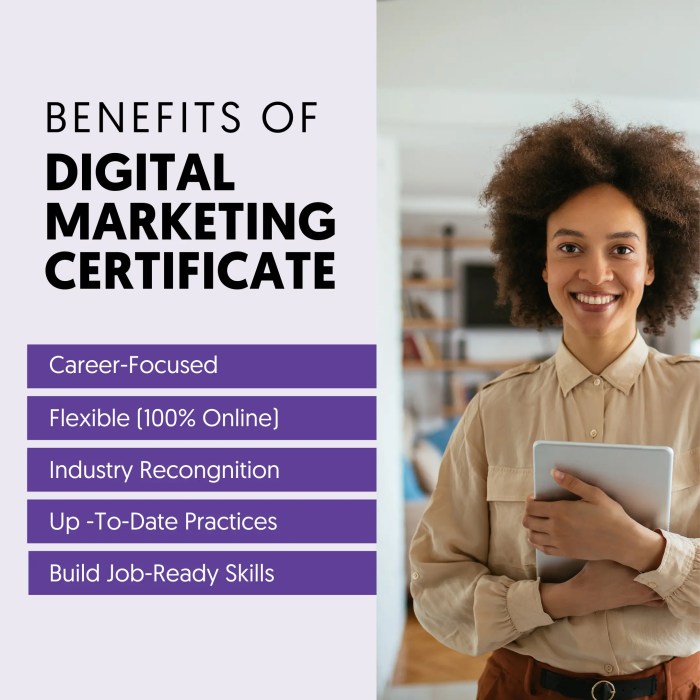
Investing in a digital marketing certification is a significant step for anyone looking to enhance their skills and improve their career prospects in this dynamic field. Understanding the costs associated with obtaining such certifications is crucial for making informed decisions. In this segment, we will Artikel the typical expenses, financial aid options, and a budget plan for individuals considering this investment in their future.
Typical Costs of Digital Marketing Certifications
The costs of digital marketing certifications can vary widely based on several factors, including the institution offering the program, the depth of the curriculum, and the duration of the course. Generally, you can expect the following price ranges:
- Basic certifications: $200 – $500
- Intermediate programs: $500 – $1,500
- Advanced certifications or specialized courses: $1,500 – $3,000
Many institutions may also charge additional fees for materials, exams, or access to resources. It’s advisable to factor in these extra costs to get a comprehensive view of the total investment required.
Financial Aid and Scholarships for Students
Many organizations and educational institutions recognize the importance of digital marketing skills and offer various financial aid options and scholarships. This can significantly reduce the financial burden on students pursuing certification. Options to consider include:
- Institutional scholarships based on merit or need.
- Government grants and funding programs for continuing education.
- Employer sponsorships or tuition reimbursement programs.
- Payment plans offered by institutions to spread out costs over time.
Always check with the specific certification provider for available financial aid resources, as they can vary widely between programs.
Budget Plan for Certification Consideration
Creating a budget plan can help you manage your finances effectively when considering a digital marketing certification. Here’s a suggested breakdown of categories to consider:
- Tuition Fees: Estimate the cost based on the program you’re interested in.
- Materials and Supplies: Budget for textbooks, software, or online resources.
- Examination Fees: Include any costs associated with certification exams.
- Transportation: Factor in travel costs if attending in-person classes or workshops.
- Time Investment: Consider any potential loss of income if you need to reduce work hours while studying.
By keeping track of these categories, you can create a comprehensive budget that aligns with your financial situation and certification goals. Remember, investing in your education today can lead to greater career opportunities and earning potential in the future.
Career Opportunities Post-Certification
Digital marketing certifications provide a stepping stone into a rapidly evolving field, equipping professionals with essential skills and knowledge to thrive in various roles. As businesses increasingly shift their focus to online channels, the demand for certified digital marketers continues to rise, leading to a plethora of career opportunities.The landscape of career paths for certified digital marketers is diverse, as the skills acquired through certification programs can be applied across numerous roles.
Professionals can explore positions in areas such as:
Various Career Paths for Certified Digital Marketers
The following are some key career paths available to certified digital marketers, showcasing the versatility of their skill sets:
- Digital Marketing Manager: Oversees marketing strategies and campaigns, ensuring alignment with business goals. They lead teams and coordinate efforts across various digital channels.
- Specialist: Focuses on optimizing website content to improve search engine rankings, driving organic traffic and enhancing online visibility.
- Content Marketing Strategist: Develops and executes content strategies to engage audiences, nurture leads, and build brand loyalty.
- PPC Specialist: Manages pay-per-click advertising campaigns, analyzing performance metrics to maximize return on investment.
- Social Media Manager: Creates and curates content for social media platforms, engaging with audiences and promoting brand awareness.
- Email Marketing Specialist: Designs and implements email campaigns to inform and engage customers, nurturing leads through the sales funnel.
- Data Analyst: Analyzes digital marketing data to inform strategic decisions, providing insights on performance and optimization opportunities.
The impact of obtaining a digital marketing certification is noteworthy, particularly in terms of salary expectations and opportunities for job promotions. Professionals who are certified often stand out in their job applications, leading to competitive advantages in salary negotiations.
Impact of Certification on Salary Expectations
Research indicates that certified digital marketers tend to earn higher salaries compared to their non-certified counterparts. According to industry surveys, the average salary for a digital marketer with a certification can increase by as much as 20% or more. Furthermore, certified individuals are often considered for promotions and leadership roles, as employers recognize the value of specialized training.
“Certification not only enhances your knowledge but also significantly boosts your marketability, leading to better salary prospects and career growth.”
Successful Professionals Benefiting from Certifications
Numerous case studies highlight the success of individuals who have leveraged digital marketing certifications to advance their careers. One notable example is Jane Doe, who after obtaining her digital marketing certification, transitioned from a traditional marketing role to a Digital Marketing Manager position at a leading tech company. Within two years, she was promoted to Senior Marketing Director, overseeing a team of 15 and managing a multi-million dollar budget.Another example is John Smith, who started as a social media intern after completing his certification.
His understanding of analytics and content strategy helped him secure a full-time position as a Social Media Strategist, where he successfully increased his company’s online engagement by 300% over a year. His journey culminated in a recent job offer as Head of Digital Marketing at a prominent e-commerce brand.These real-life successes illustrate the tangible benefits of obtaining a digital marketing certification, reinforcing the notion that investing in education opens up numerous career pathways and opportunities for advancement.
Online Learning Experience for Digital Marketing Certification
The online learning experience for digital marketing certification is designed to provide flexibility and accessibility, accommodating diverse learning styles. With the rapid growth of the digital landscape, many professionals are turning to online courses to gain the necessary skills and knowledge. These courses often feature various learning formats that cater to different preferences and schedules.Online certification courses typically offer a combination of learning formats, enhancing the educational experience.
Common formats include video lectures, live workshops, interactive quizzes, and discussion forums. Video lectures are usually pre-recorded, allowing learners to study at their own pace. Live workshops, on the other hand, provide opportunities for real-time interaction with instructors and peers, fostering a collaborative learning environment.
Learning Formats Available in Online Certification Courses
Understanding the different formats available can help learners choose the best fit for their needs. Here’s a breakdown of some common formats:
- Video Lectures: These are key components of online courses, allowing learners to access content anytime, anywhere. They often include presentations, animations, and graphics that make complex concepts more digestible.
- Live Workshops: Live sessions provide immediate feedback and create a sense of community among participants. Instructors can address questions and clarify topics in real time.
- Interactive Quizzes: Quizzes help reinforce learning by allowing learners to test their knowledge and retention of the material, making the learning process more engaging.
- Discussion Forums: These platforms enable learners to share insights, ask questions, and collaborate with peers on projects, enriching the overall learning experience.
- Case Studies: Real-life examples and case studies give learners practical insights into how digital marketing strategies are implemented in the business world.
Maximizing the online learning experience requires strategies that promote engagement and effective study habits. Here are some tips to enhance your learning journey:
- Create a Study Schedule: Dedicate specific hours each week to focus on coursework, ensuring consistent progress.
- Participate Actively: Engage in live sessions and discussion forums. Participation helps deepen understanding and builds connections with instructors and peers.
- Utilize Resources: Take advantage of supplemental materials like eBooks, articles, and webinars to expand your knowledge beyond the course content.
- Practice What You Learn: Apply concepts through hands-on projects or simulations. This practical application strengthens knowledge retention.
- Seek Feedback: Regularly request feedback from instructors or peers to identify areas for improvement and gain new perspectives.
Collecting and analyzing feedback from past participants can provide insights into the effectiveness of various courses. The following table summarizes feedback from several digital marketing certification programs:
| Course Name | Participant Rating (Out of 5) | Key Highlights | Areas for Improvement |
|---|---|---|---|
| Digital Marketing Masterclass | 4.5 | Comprehensive curriculum, engaging instructors | More interactive elements needed |
| Google Digital Garage | 4.8 | Excellent resources, well-structured | Limited real-time interaction |
| HubSpot Inbound Marketing Certification | 4.6 | Practical insights, real-world applications | More advanced topics desired |
| Coursera Digital Marketing Specialization | 4.7 | Diverse learning formats, flexible schedule | Technical issues during live sessions |
By understanding the available learning formats and following these tips, aspiring digital marketers can optimize their online education experience and pave the way for a successful career in the field.
Networking and Community Building Through Certification Programs: Digital Marketing Certification Online With Certificate
In the fast-paced world of digital marketing, networking and community building are essential components for success. Certification programs offer a unique opportunity to connect with like-minded individuals who share similar professional interests and aspirations. By participating in these programs, individuals can expand their professional network, gain insights from peers, and foster relationships that can lead to collaborative opportunities in the future.Digital marketing certification programs often serve as a melting pot for aspiring marketers, industry veterans, and educators.
These programs create a platform for individuals to share experiences, strategies, and insights, which can be invaluable in navigating the complexities of the digital marketing landscape.
Opportunities for Professional Communities
Post-certification, there are numerous platforms available for newly certified individuals to join professional communities that align with their interests and career goals. Engaging with these communities can provide ongoing support, resources, and opportunities for career advancement. Here are some of the ways to connect with professional networks:
- Alumni Networks: Many certification programs maintain alumni groups, allowing certified professionals to stay connected, share job opportunities, and support each other’s growth.
- Online Forums and Platforms: Websites like LinkedIn, Reddit, and specialized digital marketing forums provide spaces for certified marketers to ask questions, share knowledge, and discuss the latest trends in the industry.
- Social Media Groups: Facebook Groups and LinkedIn Groups dedicated to digital marketing can be great resources for networking. They often host discussions, share articles, and organize virtual meetups.
Platforms for Knowledge Sharing
Certified professionals have various options to share their expertise and learn from others in the field. Engaging in knowledge-sharing platforms not only enhances personal growth but also contributes to the broader digital marketing community. The following platforms are particularly beneficial:
- Webinars and Workshops: Many certification programs and marketing organizations host webinars that feature industry experts discussing pressing topics. These events also provide a chance to interact with other participants.
- Industry Conferences: Attending or speaking at marketing conferences allows certified individuals to network with industry leaders, gain insights into emerging trends, and showcase their own expertise.
- Podcast Participation: Contributing to or being featured on marketing podcasts can help professionals share their knowledge while tapping into a wider audience.
“Networking is not about just collecting contacts. It’s about planting relationships.” – Unknown
Building a robust professional network through certification programs not only enhances individual capabilities but also contributes to the collective knowledge and success of the digital marketing field. By leveraging these connections and opportunities, certified marketers can significantly enhance their career trajectories and stay ahead in this ever-evolving industry.
Future Trends in Digital Marketing Certifications
As the digital landscape continues to evolve, so too does the field of digital marketing. This evolution is leading to significant changes in the types of skills required and the certifications that validate these skills. Understanding the future trends in digital marketing certifications is essential for both professionals seeking to enhance their qualifications and organizations looking to hire talent that meets emerging industry needs.The rapid advancement of technology is reshaping the educational landscape, particularly in digital marketing certifications.
Online learning platforms are integrating innovative tools that enhance the learning experience, such as artificial intelligence, virtual reality, and personalized learning paths. These advancements are not only making certifications more accessible but also more relevant to current market demands.
Emerging Trends Influencing Digital Marketing Certification Content, Digital Marketing Certification Online With Certificate
Digital marketing certifications are increasingly tailored to reflect the latest industry trends. The influence of data analytics, AI, and consumer behavior insights has prompted a shift in certification content. Here are some key trends:
- Data-Driven Decision Making: Certifications are placing a strong emphasis on data analytics skills, teaching marketers how to interpret data to drive campaign success.
- Artificial Intelligence and Machine Learning: Integrating AI tools into marketing strategies is becoming standard, requiring certifications to include AI-focused modules.
- Sustainability in Marketing: As consumers become more eco-conscious, certifications are evolving to incorporate sustainability practices within marketing strategies.
- Interactive Content Creation: With the rise of engagement-driven marketing, skills in creating interactive content like quizzes, polls, and videos are increasingly highlighted.
Technology Advancements Shaping Online Learning
The future of online learning for digital marketing certifications is greatly influenced by technological advancements. These technologies enhance the educational experience and improve skill acquisition:
- Artificial Intelligence: AI-driven platforms provide personalized learning experiences, adapting course materials to fit individual learning paces and styles.
- Virtual Reality: VR simulations can immerse learners in real-world marketing scenarios, allowing for practical application of concepts.
- Mobile Learning: With the rise of mobile technology, certification programs are increasingly accessible on smartphones, facilitating learning on-the-go.
- Gamification: Introducing game-like elements to learning boosts engagement, making it easier to grasp complex marketing concepts.
Changes in Demand for Digital Marketing Skills
The demand for specific digital marketing skills is continuously evolving, influenced by shifts in technology and consumer behavior. As we look to the future, certain sectors are likely to see increased demand for specific skills:
- E-commerce: The surge in online shopping has heightened the need for marketers skilled in e-commerce strategies and technologies.
- Social Media Marketing: As platforms evolve, marketers skilled in creating compelling content and leveraging social media algorithms will be in high demand.
- Expertise: Search engine optimization remains vital, with ongoing changes in algorithms necessitating updated skills and knowledge.
- Content Marketing: Quality content continues to be king, leading to a need for marketers who can create relevant and engaging material.
The digital marketing landscape is always changing; staying relevant means investing in the right certifications that reflect these changes.
Final Wrap-Up
In conclusion, pursuing a Digital Marketing Certification Online With Certificate is a strategic move for anyone looking to thrive in the digital age. With numerous career opportunities and the potential for salary growth, it’s an investment in your future. As you navigate the online learning experience, remember that the knowledge gained will not only enhance your professional skill set but also connect you with a community of like-minded marketers, ready to support and share insights for mutual success.
Helpful Answers
What is the typical duration of online digital marketing certifications?
Most online digital marketing certifications can range from a few weeks to several months, depending on the program’s depth and structure.
Are online digital marketing certifications recognized by employers?
Yes, many employers recognize online digital marketing certifications, especially those from accredited institutions known for quality education.
Do I need prior experience to enroll in a digital marketing certification program?
No, many programs welcome beginners, although some might offer advanced courses that require prior knowledge or experience.
Can I complete the certification at my own pace?
Yes, most online certifications offer flexible schedules, allowing you to learn at your own pace and fit your studies around your lifestyle.
What resources are available for studying digital marketing?
Resources include online courses, webinars, eBooks, blogs, and forums where you can engage with other learners and professionals in the field.